Too Many Children Are Leaving Primary School Unable to Swim – Why September’s Water Safety Changes Matter
Swimming is a life skill. Yet new figures reported by the BBC have highlighted that more than a quarter of children in England are reaching the end of primary school without achieving the swimming standards expected of them.
The findings show that just 72% of pupils can swim 25 metres, while only 70% can perform safe self-rescue.
It comes at a particularly important time for schools in England.
From September 2026, water safety will become a more explicit statutory part of school life through updated Relationships, Sex and Health Education (RSHE) guidance, strengthening the focus on helping children understand risks around water and what to do if something goes wrong.
But knowing how to stay safe around water and having the practical skills to do so need to go hand in hand.
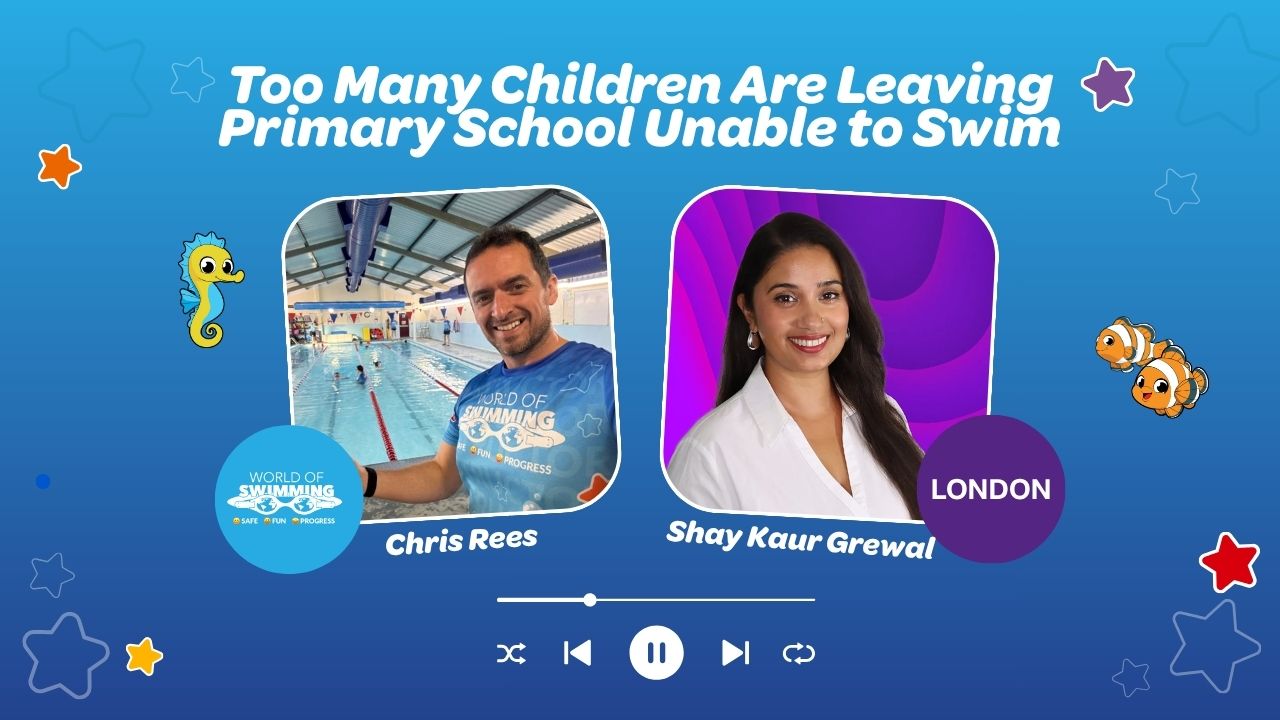
World of Swimming founder Chris Rees speaks to BBC Radio London
Following the release of the new figures, Chris Rees, Founder and Managing Director of World of Swimming, joined Shay Kaur Grewal on BBC Radio London to discuss the findings, the challenges facing school swimming and why practical swimming and water safety education are so important.
During the 15-minute interview, Chris shared his perspective from more than 20 years of teaching children to swim and working with schools to deliver swimming provision.
Listen to a clip from Chris's BBC Radio London interview below:
The figures reinforce something we see every day: knowing about water safety is incredibly important, but children also need the opportunity to develop the practical skills and confidence to keep themselves safer in and around water.
What should children be able to do by the end of primary school?
Swimming and water safety are already part of the National Curriculum for PE in England.
By the end of Year 6, pupils should be able to:
- Swim competently, confidently and proficiently over at least 25 metres
- Use a range of strokes effectively, including front crawl, backstroke and breaststroke
- Perform safe self-rescue in different water-based situations
These are not simply sporting milestones. They are essential life skills that could one day help a child respond more safely if they unexpectedly find themselves in difficulty in the water.
Yet the latest figures show that a significant proportion of children are still leaving primary education without meeting these expected swimming standards.
September 2026 brings a renewed focus on water safety
The issue is particularly timely as schools prepare for changes taking effect from September 2026.
Updated statutory RSHE guidance will strengthen water safety education, helping pupils to:
- Recognise risks in and around water
- Make safer decisions independently
- Understand the different hazards posed by pools, rivers, lakes, canals and the coast
- Understand the Water Safety Code
- Know what to do if they or somebody else gets into difficulty
This sits alongside, rather than replaces, practical curriculum swimming.
We recently explored the changes in more detail in our guide, Water Safety Lessons in Schools: What Is Changing From September 2026?
Knowing the Water Safety Code isn't the same as being able to swim
Classroom-based water safety education is an important development, but children also need opportunities to put essential skills into practice.
A child may understand that open water can be cold or contain hidden hazards, but if they unexpectedly fall into water, practical skills such as floating, controlling their breathing, treading water and safely getting themselves out become hugely important.
Similarly, being able to swim one 25-metre length of a warm swimming pool does not necessarily mean a child is confident or capable in every water-based situation.
That is why at World of Swimming, we believe practical swimming, self-rescue and water safety education should work together.
Why are children missing swimming targets?
Providing curriculum swimming can be challenging for schools. Some of the barriers schools face include:
- Limited access to suitable swimming pools
- Transport costs and logistics
- Staffing requirements
- Timetable pressures
- Limited lesson time
- Tracking swimming attainment across a year group
- Providing additional support for less confident swimmers
For some schools, simply getting an entire year group from the classroom to a suitable swimming pool can become a significant logistical exercise.
These challenges can ultimately reduce the amount of meaningful time children spend in the water.
Swimming is a practical skill, and confidence and competence develop through experience, consistency and regular practice.
It can't just be about reaching 25 metres
The National Curriculum's 25-metre target is important, but water competence goes much further. Children need to develop confidence in the water and understand how their body responds in different situations. That can include learning how to:
- Float calmly
- Tread water
- Control their breathing
- Swim using different strokes
- Change direction
- Recover from being submerged
- Safely enter and exit the water
- Respond calmly when something unexpected happens
A child who can technically swim 25 metres but panics when they unexpectedly enter cold or unfamiliar water may still be vulnerable. That is why water safety should not simply become another curriculum box to tick.
The goal should be to equip children with the practical ability, knowledge and confidence they can carry with them throughout their lives.
Bringing the classroom and swimming pool together
The September changes create a real opportunity for schools to take a more joined-up approach to swimming and water safety. Rather than treating classroom water safety and practical curriculum swimming as separate subjects, the two can work together.
Children might learn about the Water Safety Code and the risks associated with rivers, lakes, beaches and other open water environments in the classroom, before developing practical swimming, floating and self-rescue skills in the pool.
Together, these experiences can reinforce one another and help children become more confident and capable around water.
It is an approach World of Swimming is actively supporting schools to deliver.
How World of Swimming can support schools
World of Swimming has been teaching children across the South since 2004 and now supports more than 4,000 swimmers every week.
We work with schools, councils and academy trusts to make curriculum swimming and water safety easier to deliver.
Our support can include:
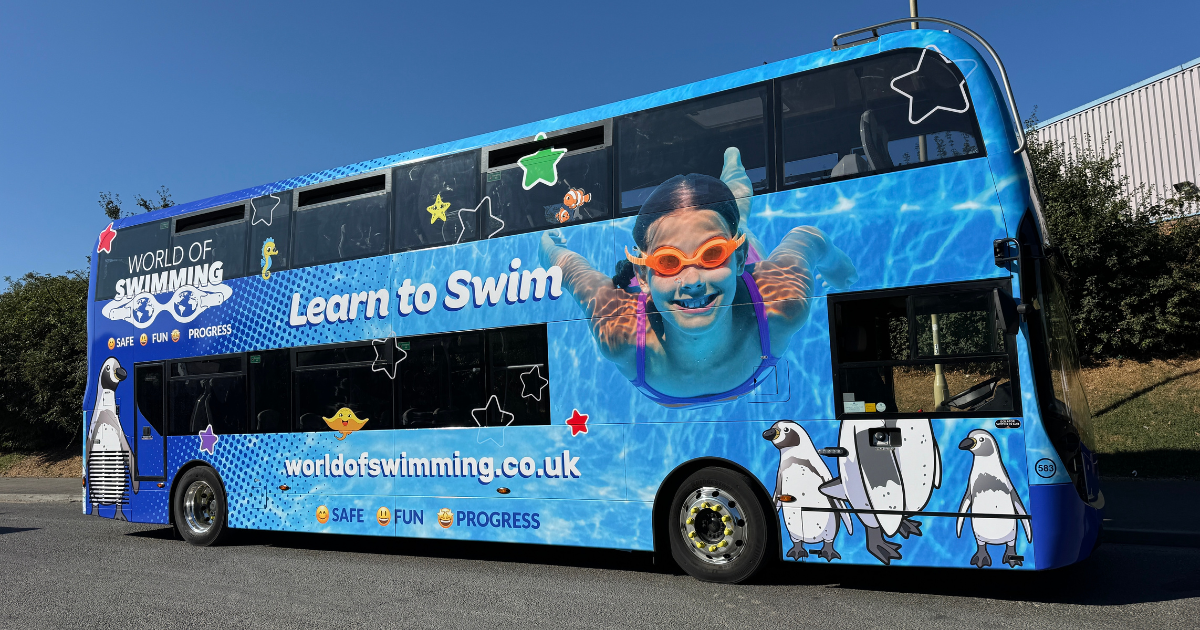
- Dedicated school transport, including our World of Swimming double-decker bus
- Pool hire
- Qualified swimming teachers
- Structured National Curriculum swimming lessons
- Practical water safety and self-rescue
- Pupil progress tracking and evaluation
- Achievement badges
- Classroom-based water safety education supporting the September 2026 RSHE requirements
Rather than schools needing to coordinate multiple suppliers, we can help provide a joined-up solution built around their pupils, timetable and location.
Find out more about swimming and water safety in schools.
Removing the barriers to school swimming
If children are leaving primary school without essential swimming skills, simply setting a target is not enough. Schools need practical ways to deliver it. That means addressing the barriers that can prevent swimming lessons from happening in the first place, including transport, pool access, staffing and available curriculum time.
The renewed focus on water safety from September 2026 creates an opportunity to look at the bigger picture.
Because the ultimate measure of success is not simply whether a school has delivered swimming lessons. It is whether children leave school safer, more confident and more capable around water.
Does your school need support with curriculum swimming?
World of Swimming can help schools create a complete swimming and water safety programme, from getting pupils to the pool through to teaching, assessment and classroom-based water safety education.
Find out more about our school swimming and water safety provision and request a tailored quote.