
Water Safety Lessons in Schools: What Is Changing From September 2026?
From September 2026, water safety education will become a more explicit statutory part of school life across England.
Updated Relationships, Sex and Health Education (RSHE) guidance means pupils will be taught how to recognise risk and keep safe around water, including the Water Safety Code. This sits alongside the existing National Curriculum requirement for primary schools to provide swimming and water safety instruction.
For schools, academy trusts and education leaders, the change creates an important opportunity: connecting practical swimming lessons with classroom-based water safety education, so children develop both the skills and knowledge needed to stay safer in and around water.
Quick Answer: What Is Changing?
From September 2026, schools in England will need to include water safety within statutory RSHE health education. This means children will learn about recognising risks and making safer decisions around water, including the Water Safety Code. This is an addition to, not a replacement for, current primary-school swimming requirements.
What Are the Current National Curriculum Swimming Requirements?
Swimming and water safety are already part of the National Curriculum for PE in England. By the end of Year 6, pupils should be taught to:
- Swim competently, confidently and proficiently over a distance of at least 25 metres
- Use a range of strokes effectively, including front crawl, backstroke and breaststroke
- Perform safe self-rescue in different water-based situations
For many schools, providing this practical swimming provision can be challenging. Pool availability, transport, staffing, timetabling and pupil assessment all need to be considered.
What Will Schools Need to Teach From September 2026?
The updated RSHE guidance places water safety within wider personal safety learning. Schools will need to help pupils understand:
- How to recognise risk in and around water
- How to make safer decisions independently
- How different environments can create different hazards, including pools, rivers, lakes, canals, beaches and floodwater
- The importance of the Water Safety Code
- What to do if they or somebody else gets into difficulty
This gives schools the chance to create a joined-up approach to water safety, combining practical swimming and self-rescue skills with classroom learning that prepares children for real-world situations.
What Should Schools Do Before September 2026?
Schools do not need to start from scratch, but now is a good time to review existing provision and identify any gaps. A practical starting point is to:
- Review the current curriculum swimming provision and pupil attainment
- Check whether pupils have access to practical self-rescue and water safety teaching
- Consider how water safety will be included in your RSHE curriculum
- Identify barriers around transport, pool access, staffing and timetabling
- Plan how classroom learning and practical swimming lessons can reinforce each other
- Consider additional support for pupils who need more confidence or practice in the water
Bridging the Gap Between the Classroom and the Pool
A child may be able to swim 25 metres in a pool, but still needs to understand the risks of cold water, currents, hidden hazards, changing weather conditions or entering open water unexpectedly.
That is why practical swimming and classroom water safety education work best together. Practical swimming lessons help children build confidence, learn effective strokes and practise safe self-rescue skills.
Classroom learning helps pupils understand how to recognise hazards, make safer choices and know how to respond if something goes wrong.
Together, these elements give children a stronger understanding of how to stay safe in, on and around water.
World of Swimming: A National Curriculum & Water Safety Partner for Schools
World of Swimming has been teaching children across the South since 2004 and now supports more than 4,000 swimmers every week. We help schools, councils, academy trusts and education leaders deliver a complete curriculum swimming and water safety solution.
Rather than needing to manage multiple suppliers, schools can access support through one experienced partner. Our all-in-one service can include:
- Dedicated school transport, including our World of Swimming double-decker bus
- Pool hire
- Qualified swimming teachers
- Structured curriculum swimming lesson delivery
- Pupil progress tracking, evaluation and achievement badges
- Classroom-based water safety education linked to the September 2026 RSHE changes
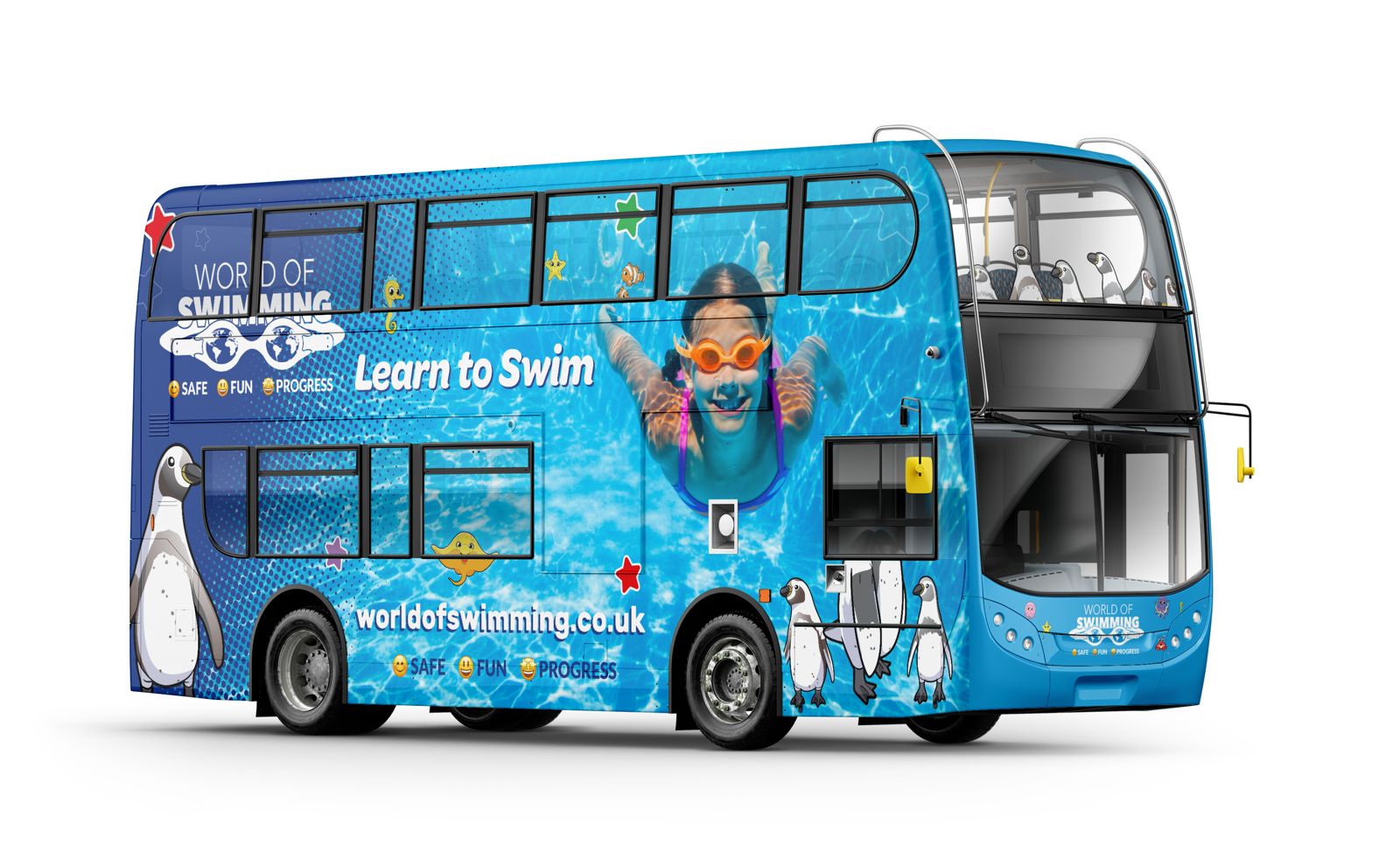
Removing Barriers to Curriculum Swimming
We understand that organising school swimming can be complex. Schools may be managing limited pool availability, transport costs, staffing pressures, timetable constraints and the need to track pupil progress.
World of Swimming is designed to help reduce that pressure. We can support with the transport, facilities, qualified teachers, lesson delivery and water safety education needed to create a tailored programme for your pupils.
Our approach is built around three values:
Safe ☺️ Fun 😃 Progress 🤩
Supporting Every Child to Access a Life Skill
Swimming is more than a curriculum requirement. It is a life skill that can build confidence, independence and safer habits around water. By bringing curriculum swimming, water safety education and practical support together, schools can give pupils the opportunity to develop skills that support them far beyond the school gates.
Request a Curriculum Swimming & Water Safety Quote
Whether your school needs support with transport, pool hire, qualified teachers, curriculum swimming lessons, pupil progress tracking, classroom water safety education or a complete end-to-end service, World of Swimming can help.
Request a tailored quote through our Schools page.
You can also explore our swimming lesson locations and find out more about our Learn to Swim stages.

Frequently Asked Questions
Is water safety becoming compulsory in schools?
Water safety is being added to statutory RSHE health education from September 2026. This means schools will need to teach pupils about recognising risk and keeping safe around water, including the Water Safety Code.
Is swimming still part of the National Curriculum?
Yes. Swimming and water safety remain part of the National Curriculum for PE in England. Primary schools must provide swimming instruction at Key Stage 1 or Key Stage 2.
What do pupils need to achieve in school swimming?
By the end of Year 6, pupils should be taught to swim at least 25 metres, use a range of strokes effectively and perform safe self-rescue in different water-based situations.
Can World of Swimming provide transport for school swimming lessons?
Yes. World of Swimming can support schools with dedicated transport solutions, including our double-decker school swimming bus.
Can World of Swimming provide pool hire and teachers?
Yes. We can provide pool hire, qualified swimming teachers and structured curriculum swimming lesson delivery as part of a tailored school package.
Can World of Swimming support classroom-based water safety learning?
Yes. We can support classroom-based water safety education linked to the September 2026 RSHE requirements, alongside practical swimming and self-rescue teaching.