Heading
Lorem ipsum dolor sit amet, consectetur adipiscing elit. Suspendisse varius enim in eros elementum tristique. Duis cursus, mi quis viverra ornare, eros dolor interdum nulla, ut commodo diam libero vitae erat. Aenean faucibus nibh et justo cursus id rutrum lorem imperdiet. Nunc ut sem vitae risus tristique posuere.
Lorem ipsum dolor sit amet, consectetur adipiscing elit. Suspendisse varius enim in eros elementum tristique. Duis cursus, mi quis viverra ornare, eros dolor interdum nulla, ut commodo diam libero vitae erat. Aenean faucibus nibh et justo cursus id rutrum lorem imperdiet. Nunc ut sem vitae risus tristique posuere.
Ducklings
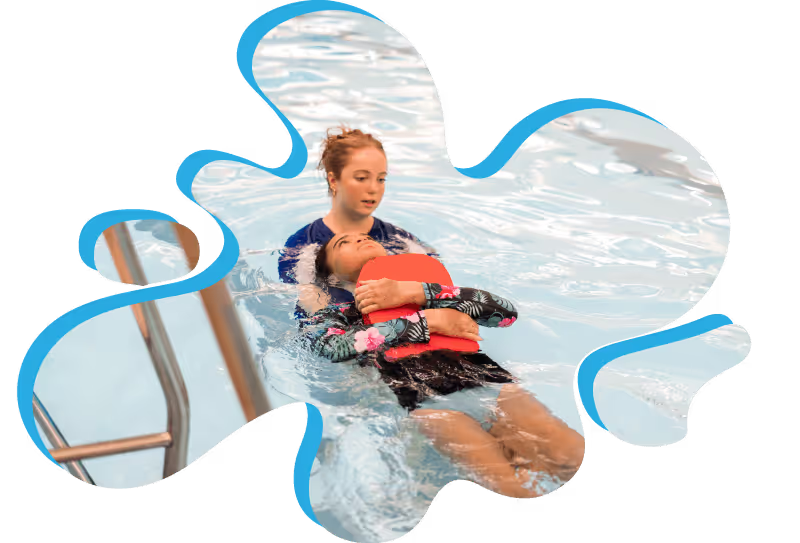
Learners begin moving independently in the water with gently diminishing support from an adult. This stage includes skills like safely entering and exiting the pool, floating on their back, blowing bubbles, and moving a short distance with or without assistance.
Key Learning Points for Duckling 1
- Make a supervised safe entry with adult support if required
- Float on back with adult support behind the head without aids
- Blow bubbles at the water surface
- Wet the head without submersion
- Kick five metres on back with adult support
- Travel without assistance five metres to a floating object
- Enter the pool, rotate and return to the side with adult support
- Exit the water safely with minimal adult support
Find your nearest pool
At this stage, swimmers practice sitting entries and log-roll rotations, slowly moving toward more self-reliance. They’ll confidently submerge the face, blow objects across the water, and travel along the pool’s edge unaided.
Key Learning Points for Duckling 2
- Make a sitting entry with adult support if required
- Using a buoyancy aid, rotate through 180 degrees without assistance
- Submerge the face with confidence under adult supervision and without force
- Blow an object for a distance of two metres
- Travel 3 metres using arms and/or legs without assistance
- Move five metres along the rail or wall without assistance
- Enter the pool, rotate and return to the side with minimal adult support
- Exit the water safely with minimal adult support
Find your nearest pool
Now learners can jump in under supervision and float without help. They’ll practice pushing off in a streamlined position, blowing bubbles underwater, and independently swimming a short distance to the pool side.
Key Learning Points for stage 3
- Jump in from poolside and submerge to a minimum depth of 1 metre
- Sink, push away from wall and maintain a streamlined position
- Push and glide on the front with arms extended and log roll onto the back
- Push and glide on the back with arms extended and log roll onto the front
- Travel 5 metres on the front, perform a tuck to rotate onto the back and return on the back
- Fully submerge to pick up an object
- Answer correctly 3 questions on the Water Safety Code*
- Push and glide and travel 10 metres on the back
- Push and glide and travel 10 metres on the front
- Perform a tuck float and hold for 3 seconds
- Exit the water without using steps
Water Safety Code
- Stop and Think – Always swim in a safe place
- Stay Together – Always swim with an adult
- Float – If you fall in, float on your back, breathe, relax
- Call 999 – If someone else in trouble
- Tell the person to float on their back
- Throw them something that floats
Find your nearest pool
At this final stage, swimmers jump in confidently, perform star or mushroom floats, and execute 360° rolls and streamlined glides. They can swim 10 metres unaided, and jump in, swim back to the edge, then climb out, demonstrating solid independence at the water’s edge.
Key Learning Points for Duckling 4
- Jump in unaided but supervised into the water
- Show a mushroom or star float
- Rotate 360° either horizontally or vertically
- Push and glide achieving a streamlined position on the front or back
- Submerge completely
- Travel without assistance 10 metres on the front or back
- Show the sequence to jump in the water, turn around, swim back to the point of entry and hold on to the side or rail
- Climb out of the water with assistance if required
Find your nearest pool
Learn to Swim
In Stage 1, swimmers build early water confidence. They’ll learn to enter and exit the water safely, move forwards, backwards, and sideways for about 5 metres, float on their front and back, push and glide off the wall, and reorient themselves before standing up, all while becoming comfortable with water on their faces.
Key Learning Points for stage 1
- Enter the water safely
- Move forward for a distance of 5 metres, feet may be on or off the floor
- Move backwards for a distance of 5 metres, feet may be on or off the floor
- Move sideways for a distance of 5 metres, feet may be on or off the floor
- Scoop the water and wash the face
- Be comfortable with water showered from overhead
- Move from a flat floating position on the back and return to standing
- Push and glide in a flat position on the front from a wall
- Push and glide in a flat position on the back from a wall
- Give examples of two pool rules
- Demonstrate an understanding of pool rules
- Exit the water safely
Find your nearest pool
Stage 2 introduces independent breathing and movement. Swimmers will practice jumping in, blowing bubbles underwater, rotating between front and back floats, gliding from the wall, and traveling 5 metres using leg action, without any floatation aids. They’ll also learn log rolls and exit the water with confidence.
Key Learning Points for stage 2
- Jump in from poolside safely to a minimum depth of 1 metre
- Blow bubbles a minimum of 3 times rhythmically with nose and mouth submerged
- Move from a flat floating position on the back and return to standing without support
- Move from a flat floating position on the front and return to standing without support
- Push from a wall and glide on the back – arms can be by the side or above the head
- Push from a wall and glide on the front with arms extended
- Travel using a recognised leg action with feet off the pool floor on the back for 5 metres
- Travel using a recognised leg action with feet off the pool floor on the front for 5 metres
- Perform a tuck to rotate from a flat floating position on the front, to a back floating position, then return to standing
- Perform a tuck to rotate from a flat floating position on the back, to a front floating position, then return to standing
- Perform a log roll from the back to the front
- Perform a log roll from the front to the back
- Exit the water without support
Find your nearest pool
In Stage 3, swimmers master submersions and streamlined movement. They’ll jump in and push away, displaying gliding with rotation, travel 10 metres on their front and back, perform a tuck float, exit without steps, and correctly demonstrate core water safety messages.
Key Learning Points for stage 3
- Jump in from poolside and submerge to a minimum depth of 1 metre
- Sink, push away from wall and maintain a streamlined position
- Push and glide on the front with arms extended and log roll onto the back
- Push and glide on the back with arms extended and log roll onto the front
- Travel 5 metres on the front, perform a tuck to rotate onto the back and return on the back
- Fully submerge to pick up an object
- Answer correctly 3 questions on the Water Safety Code*
- Push and glide and travel 10 metres on the back
- Push and glide and travel 10 metres on the front
- Perform a tuck float and hold for 3 seconds
- Exit the water without using steps
Water Safety Code
- Stop and Think – Always swim in a safe place
- Stay Together – Always swim with an adult
- Float – If you fall in, float on your back, breathe, relax
- Call 999 – If someone else in trouble
- Tell the person to float on their back
- Throw them something that floats
Find your nearest pool
At Stage 4, swimmers are introduced to core strokes and coordination. They’ll perform shape changes in floats, glide toward the pool floor, kick 10 metres using strokes like backstroke, front crawl, breaststroke, and butterfly (using optional equipment), head-first sculling, and continue gliding with stroke choice.
Key Learning Points for stage 4
- Perform a sequence of changing shapes (minimum of three) whilst floating on the surface and demonstrate an understanding of floating
- Push and glide from the wall towards the pool floor
- Kick 10 metres backstroke (one item of equipment optional)
- Kick 10 metres front crawl (one item of equipment optional)
- Kick 10 metres butterfly on the front or on the back
- Kick 10 metres breaststroke on the front (equipment optional)
- Perform a head first sculling action for 5 metres in a flat position on the back
- Travel on back and log roll in one continuous movement onto front
- Travel on front and log roll in one continuous movement onto back
- Push and glide and swim 10 metres, choice of stroke is optional
- Travel on the back and roll in one continuous movement onto front
- Travel on the front and roll in one continuous movement onto back
- Swim 10 metres, choice of stroke is optional
Find your nearest pool
Stage 5 builds independence in deeper water. Swimmers will learn sculling techniques, tread water for 30 seconds, execute deep-water jumps, and swim 10 metres using all four strokes to Swim England standards. They’ll also perform handstands, forward somersaults, and learn a method for getting help.
Key Learning Points for stage 5
- Perform a flat stationary scull on the back
- Perform a feet first sculling action for 5 metres in a flat position on the back
- Perform a sculling sequence with a partner for 30-45 seconds to include a rotation
- Tread water for 30 seconds
- Perform 3 different shaped jumps into deep water
- Push and glide and swim 10 metres backstroke (performed to Swim England expected standards)
- Push and glide and swim 10 metres front crawl (performed to Swim England expected standards)
- Push and glide and swim 10 metres breaststroke (performed to Swim England expected standards)
- Push and glide and swim 10 metres butterfly (performed to Swim England expected standards)
- Perform a handstand and hold for a minimum of 3 seconds
- Perform a forward somersault
- Demonstrate an action for getting help
- Minimum 200m swim
Find your nearest pool
In Stage 6, swimmers gain skills in stamina and resilience. They’ll understand exercise safety, glide into strokes like backstroke and front crawl, perform rhythmical breathing in strokes, swim 25 metres with chosen stroke, perform a shout-and-signal rescue, and complete a surface dive.
Key Learning Points for stage 6
- Give two examples of how to prepare for exercise and understand why it is important
- Sink, push off on side from the wall, glide, kick, and rotate into backstroke
- Sink, push off on side from the wall, glide, kick and rotate into front crawl
- Swim 10 metres wearing clothes
- Push and glide and swim front crawl to include at least six rhythmical breaths
- Push and glide and swim breaststroke to include at least six rhythmical breaths
- Push and glide and swim butterfly to include at least three rhythmical breaths
- Push and glide and swim backstroke to include at least six regular breaths
- Push and glide and swim 25 metres, choice of stroke is optional (performed to Swim England expected standards)
- Perform a “shout and signal” rescue
- Perform a surface dive
- Exit from the water without using steps
- Swim minimum 400m
Find your nearest pool
Stage 7 focuses on mastery and endurance. Swimmers will swim 25 metres of each stroke, complete a movement sequence incorporating multiple skills, perform dives, swim 50–100 metres continuously using multiple strokes, tread water using egg-beater action, and complete an obstacle course with feet off the pool floor throughout.
Key Learning Points for stage 7
- Push and glide and swim 25 metres backstroke (performed to Swim England expected standards)
- Push and glide and swim 25 metres front crawl (performed to Swim England expected standards)
- Push and glide and swim 25 metres breaststroke (performed to Swim England expected standards)
- Push and glide and swim 25 metres butterfly (performed to Swim England expected standards)
- Perform a movement sequence (linking skills with strokes and sculls) of one minute duration, in a group of 3 or more, incorporating a number of the following skills: Sculling: head first, feet first Rotation: forward or backward somersault, log roll Floating: star on the front or on the back, tuck float, create own Eggbeater: moving, lifting one or both arms out of the water
- Perform a sitting dive or dive
- Push and glide and swim 50 metres continuously using one stroke (performed to Swim England expected standards)
- Push and glide and swim 100 metres, using a minimum of three different strokes (performed to Swim England expected standards)
- Tread water using eggbeater action for 30 seconds
- Complete an obstacle course (using minimum of four objects) with feet off the pool floor throughout Remove Swim minimum 800m
Find your nearest pool
Pre-Club
At Stage 8, swimmers focus on improving efficiency and technique across all four strokes (front crawl, backstroke, breaststroke, and butterfly). They also begin to learn competitive skills such as starts and turns, while developing greater stamina by swimming longer distances.
Key Learning Points for stage 8
- Complete a set lasting 400 metres (e.g. 16 x 25 metres, 8 x 50 metres, 4 x 100 metres) on a specific turnaround time agreed by the teacher or coach (e.g. 1.00 minutes for each 25 metres) with a focus on stroke technique and consistency.
- Swim 400 metres continuously using one stroke.
- Push and streamline then kick 25 metres backstroke with or without using a board.
- Push and streamline then kick 25 metres breaststroke with or without using a board.
- Push and streamline then kick 25 metres butterfly without using a board.
- Push and streamline then kick 25 metres front crawl with or without using a board.
- Perform a backstroke turn from 10 metres in to 15 metres out.
- Perform a breaststroke turn from 10 metres in to 15 metres out.
- Perform a butterfly turn from 10 metres in to 15 metres out.
- Perform a front crawl turn from 10 metres in to 15 metres out.
- Perform a dive track or grab start, and kick butterfly underwater in a streamlined position for 5 metres with the focus on progressing it to 10 metres.*
*Delivery will depend on the pool design and facilities available.
Find your nearest pool
Stage 9 continues to refine stroke technique and introduces more advanced skills, including underwater work, race skills, and stroke-specific drills. Swimmers will also work on building aerobic capacity, swimming distances of up to 800 metres, and practising efficient pacing.
Key Learning Points for stage 9
- Complete a set lasting 800 metres (either 16 x 50 metres, 8 x 100 metres, 4 x 200 metres) on a specific turnaround time agreed by the teacher or coach (e.g. 1.30 minutes for 50 metres) with a focus on stroke technique and consistency.
- Swim 800 metres continuously using one stroke.
- Swim a continuous 100 metre individual medley (4 x 25 metres) using recognised turns with a focus on stroke technique and consistency.
- Perform a 15 metre underwater kick on front from a push and glide in a streamlined position.
- Perform a backstroke start then butterfly kick in a streamlined position underwater up to a maximum of 15 metres from the start point (wall). Transfer into stroke and complete the remainder of the 25 metres.*
- Perform a front crawl start then kick in a streamlined position underwater up to a maximum of 15 metres from the start point (wall). Transfer into stroke and complete the remainder of the 25 metres.*
- Perform a butterfly start then kick in a streamlined position up to a maximum of 15 metres from the start point (wall). Transfer into stroke and complete the remainder of the 25 metres.*
- Perform a breaststroke start then perform a one and a half pull underwater. Transfer into stroke and complete the remainder of the 25 metres.*
*Delivery will depend on the pool design and facilities available.
Find your nearest pool
Stage 10 is all about preparing swimmers for a smooth transition into competitive swimming clubs. By this stage, swimmers can demonstrate excellent stroke technique across all four strokes, complete training sets, and swim distances up to 1500 metres. They’ll also develop discipline, focus, and an understanding of lane etiquette, setting them up for success in the world of club swimming.
Key Learning Points for stage 10
- Complete a set lasting 1600 metres (either 16 x 100 metres, 8 x 200 metres, 4 x 400 metres) on a specific timed turnaround set by the teacher or coach (e.g. 2.30 minutes for 100 metres), focus on stroke technique and consistency.
- Swim 1500 metres continuously using one stroke.
- Perform a continuous 100 metre individual medley kick (4 x 25 metres) without using a kick board.
- Swim a continuous 200 metre individual medley (4 x 50 metres) using recognised turns.
- Perform a front crawl relay take over – as an incoming swimmer.
- Perform a front crawl relay take over – as an outgoing swimmer.
*Delivery will depend on the pool design and facilities available.
Find your nearest pool